
Buying guides, sizing tools, installation checklists, FAQs, and a full glossary – built to answer every question before you need to ask it.
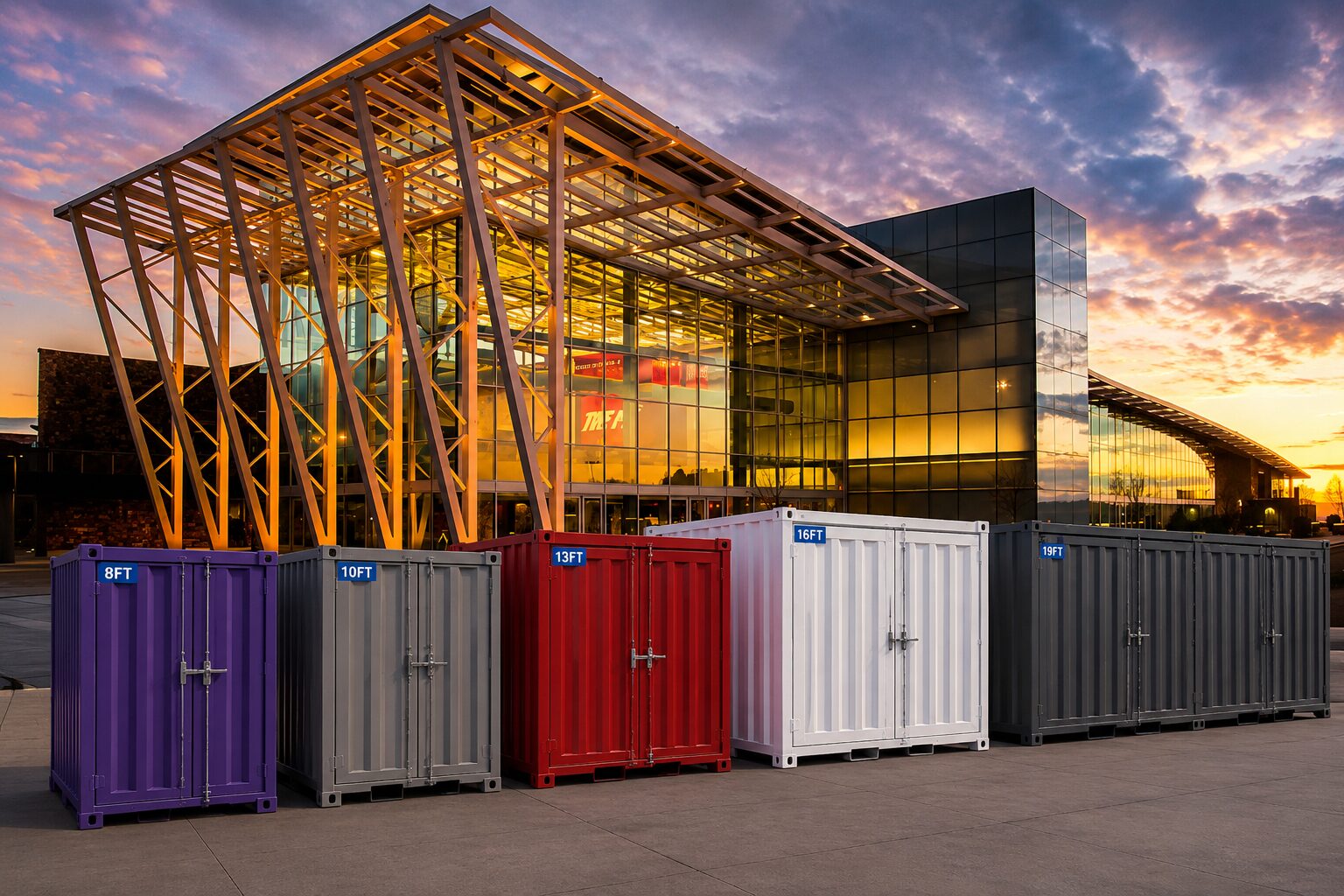
The most common mistake buyers make is choosing a unit that’s either too small for their gear or too large for their access. This guide walks through exactly how to match unit size to your real-world situation – covering gate width, surface type, volume estimation, and use-case fit.
Side-by-side breakdown of cost, durability, access requirements, and long-term value. Helps you explain the difference to anyone who asks “why not just get a shed?
Covers site requirements, unit configurations, multi-unit deployments, and what questions to ask before committing to a commercial storage solution.
Honest breakdown of every available accessory — from interior shelving and locking systems to pipe racks — and when each one is worth adding to your order.
What galvanization actually does, why powder coating matters, and how My Yard Vault units hold up compared to alternatives in long-term outdoor exposure.
What factors determine permit requirements for portable storage, what questions to ask your local authority, and how to approach the conversation to get a straight answer
Side-by-side breakdown of cost, durability, access requirements, and long-term value. Helps you explain the difference to anyone who asks “why not just get a shed?
Select what you need to store and we’ll recommend the right unit size — along with the next-size options if you're on the fence. No forms. No friction.
Straightforward answers to the questions that come up most. If yours isn’t here, reach out – we respond fast.
Permit requirements vary by municipality and property type. In most residential cases, portable storage structures that are not permanently anchored do not require a building permit — but we recommend checking with your local authority before installation. We’re happy to help you understand what applies to your situation.
Any reasonably level surface works — concrete, pavers, compacted gravel, or level ground. The unit does not require a concrete slab or permanent foundation.
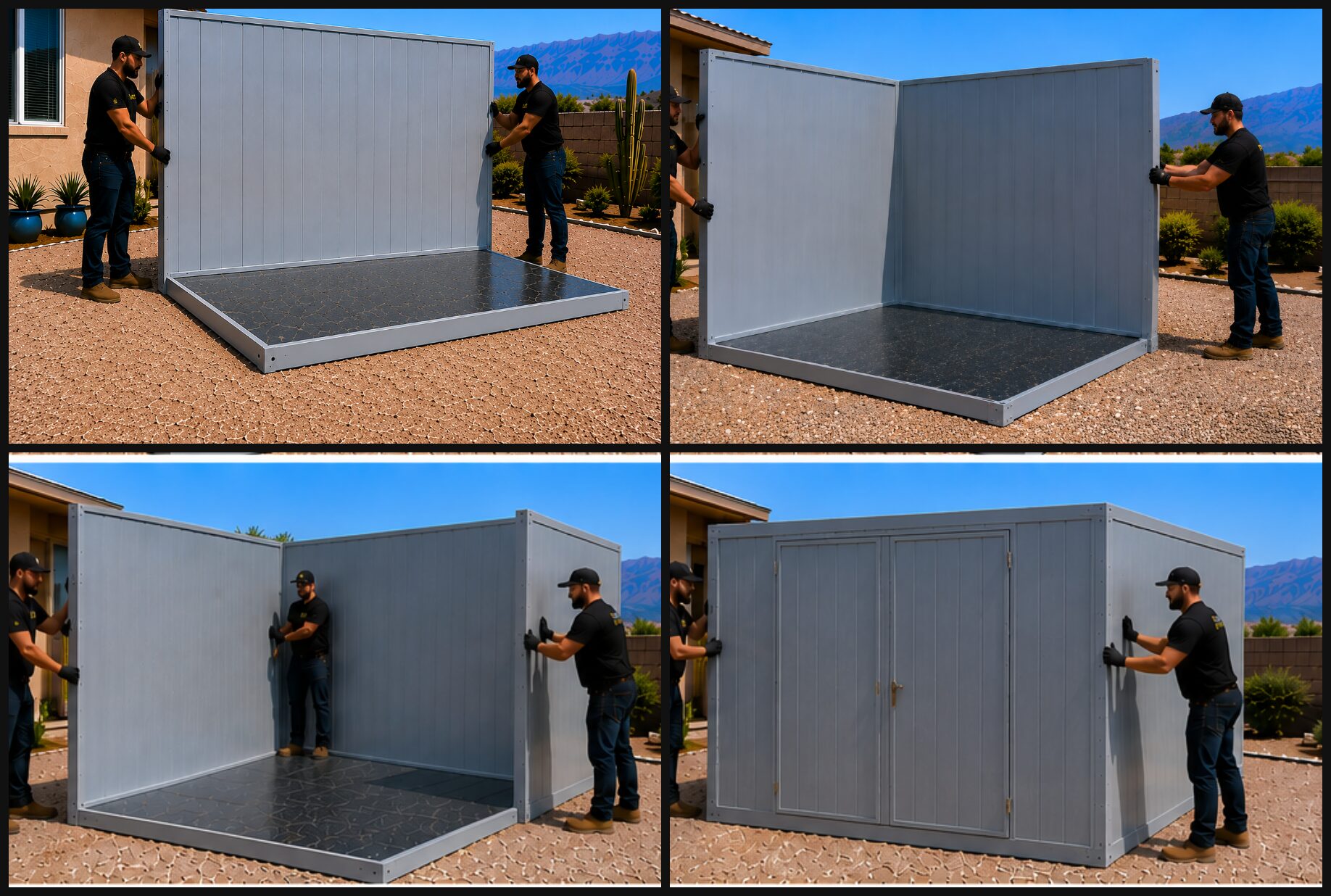
Assembly is designed for 2–3 people. One person can manage parts of it, but panel handling and alignment is significantly easier with a second set of hands. We recommend having at least two people available.
Most units assemble in approximately one hour with two people. Larger units (16′ and 19′) may take closer to 90 minutes. First-time assemblers typically take a little longer — the second time is noticeably faster.
Disassembly follows the same steps in reverse. Panels pack flat and transport in a standard truck or trailer. Most customers complete a full relocation in under two hours.
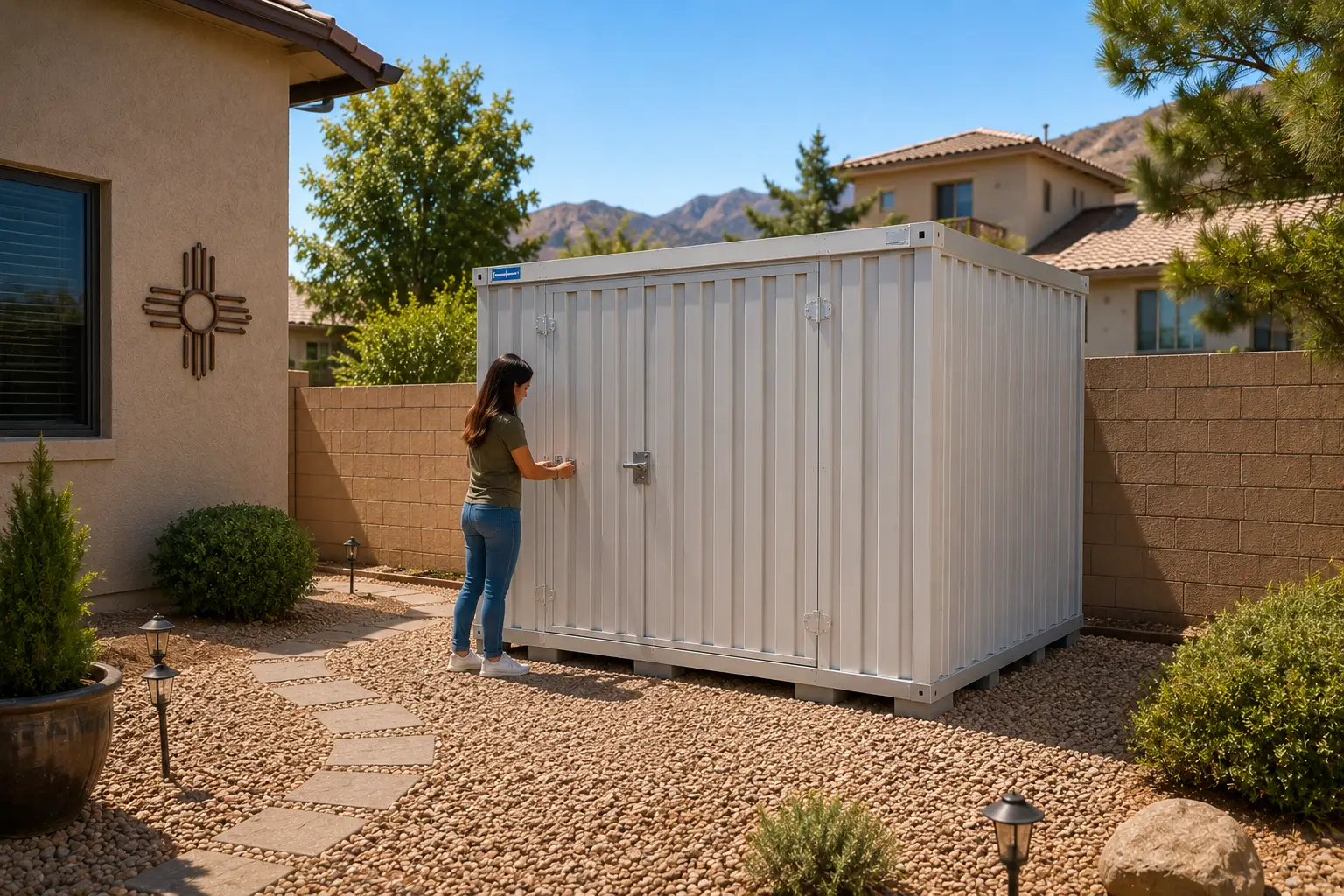
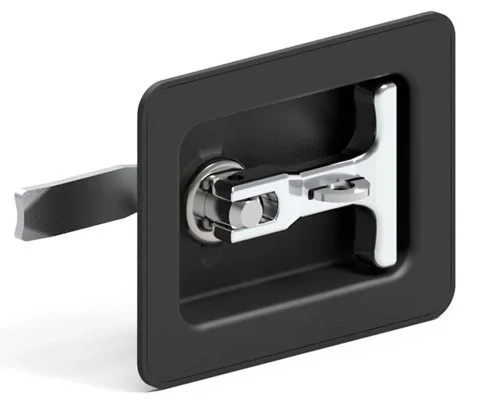
Yes. The units are built from galvanized steel with a heavy-duty T-handle locking system. They are significantly more tamper-resistant than standard garden sheds and comparable in security to purpose-built on-site storage containers.
Yes. Interior shelving, locking systems, pipe racks, and other accessories can be added at any time. You don’t need to order everything upfront — the system is modular by design.
You’ve done your research. Now let’s make sure you get exactly the right unit for your space. Tell us what you need – we’ll handle the rest from size recommendation to delivery coordination.